
Free Grade 4 English lesson: Adjectives and degrees of comparison
Learn the words that describe, and how we compare things. Read the rule, practise it straight away, then tap “I understand this”.
- Know what an adjective is: a word that describes a noun.
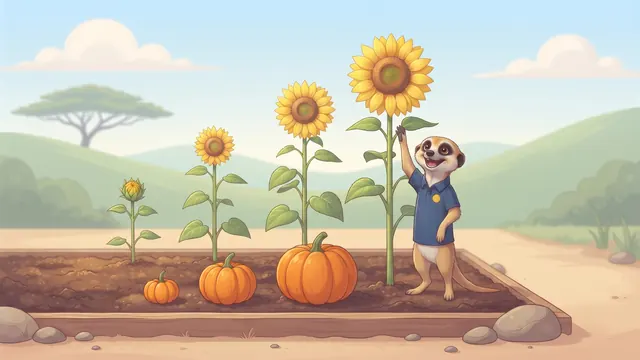
- Know the three degrees: tall – taller – tallest.
- Compare two things with than.
- Spell bigger, nicer and happier correctly.
- Use more and most, and good – better – best.
What is an adjective?
An adjective describes a noun: how it looks, feels, sounds, tastes or how big it is.
- a big dogsize
- a red ballcolour
- sweet caketaste
- The water is cold.after is it also describes
Ask: what kind of noun? What kind of dog? A big dog.
Find the adjective
Tap the word that describes.
Three degrees of comparison
We compare with three degrees.
| Degree | Use | Example |
|---|---|---|
| positive | the plain word | The cat is small. |
| comparative (+ -er) | two things, with than | The cat is smaller than the dog. |
| superlative (+ -est) | three or more things, with the | The mouse is the smallest of all. |
Comparative + than, not then: stronger than.
Which degree?
Choose the correct word.
Spelling changes
Some words change a little before -er and -est.
| Word ends in | Rule | Examples |
|---|---|---|
| short vowel + one consonant | double the consonant | big – bigger – biggest, hot – hotter |
| -e | add only -r or -st | nice – nicer – nicest |
| consonant + -y | y becomes i | happy – happier – happiest |
Say it aloud: big-ger has two g’s, just like run-ning.
Spell it
Choose the correct spelling.
more and most
Long adjectives use more and most instead of -er and -est.
| Positive | Comparative | Superlative |
|---|---|---|
| beautiful | more beautiful | most beautiful |
| dangerous | more dangerous | most dangerous |
| interesting | more interesting | most interesting |
Never use both: not more taller, just taller.
-er or more?
Choose the correct form.
Irregular adjectives
A few adjectives change completely.
| Positive | Comparative | Superlative |
|---|---|---|
| good | better | best |
| bad | worse | worst |
Never say gooder or baddest.
Irregular
Choose the correct word.
How it can look in the test
Teachers ask the same thing in different ways. Try each question on paper first, then tap to see the answer. The number in brackets is the marks.
- Degrees1.
Give the comparative and superlative:
a) warm · b) good (4)Show the answer
Answer: a) warmer, warmest · b) better, best
Marks: 1 mark each.
- Spelling2.
Write the comparative:
a) hot · b) easy (2)Show the answer
Answer: a) hotter · b) easier
Marks: 1 mark each.
- Correct3.
Correct the mistake:
The sun is more hotter then the moon. (2)Show the answer
Answer: The sun is hotter than the moon.
Marks: 1 mark for hotter, 1 for than.
Remember it and test yourself
Tap a block to open it.
Remember this: your summary5 points
- An adjective describes a noun.
- Positive (small), comparative + -er + than (smaller than), superlative + the + -est (the smallest).
- big – bigger; nice – nicer; happy – happier.
- Long words: more / most. Never more + -er.
- good – better – best; bad – worse – worst.
Watch out!4 easy mistakes
- Not: then But: than
- Not: more taller But: taller
- Not: gooder But: better
- Not: hoter But: hotter
What the exam asks3 question types
- Give the degrees of an adjective.
- Find the adjectives in a sentence.
- Correct the mistake in a comparison.
Quick questions
Tap an answer. If you get one wrong, read why and go back to that step.
 You have ticked all 5 steps! Now you are ready for the quiz.
Ready to practise? In the Grade 4 English quiz, choose Degrees of comparison or Adjectives and adverbs.
- One step a day is enough. Let your child read the examples aloud.
- Compare things in the kitchen: “Which apple is bigger? Which one is the biggest?”
- The ticks (“I understand this”) are saved on this device only. We do not ask for names or emails.
Follows CAPS for Grade 4 English Home Language. Always check your teacher’s notes as well.
What this Grade 4 English lesson on adjectives covers
This free, interactive Grade 4 English lesson takes your child step by step through adjectives and degrees of comparison, following CAPS for English Home Language. words that describe nouns, the three degrees of comparison with -er and -est, than, simple spelling changes, more and most, and good – better – best, with practice.
After every rule your child practises straight away, and every answer is marked at once with a short explanation. Then practise in the free Grade 4 English quiz.